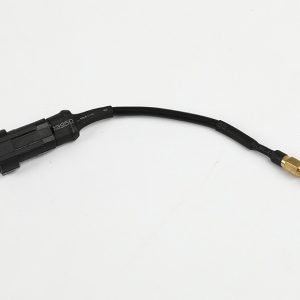
Custom Sensor Development

Custom Temperature Sensor Manufacturing for OEM Projects That Need More Than an Off-the-Shelf Part

When the operating environment, mounting space, connector, cable construction, or electrical target cannot be solved by a general catalog item, the custom route becomes the most practical starting point. This overview is written for buyers and engineers who need a manufacturer capable of turning application requirements into a workable temperature-sensing assembly without losing sight of supply, repeatability, or end-use fit.

Application-led developmentResistance and housing choicesCable and connector customizationSample-to-production support

Custom projects often begin with incomplete information rather than with a perfect specification. The important thing is to define the environment, the fit constraints, and the performance goals clearly enough that the build direction can be narrowed. From there, the conversation usually moves through application review, sample planning, verification, and a more stable production discussion.

Section

How this solution is usually evaluated

Visitors rarely choose a sensor or probe by headline alone. They compare fit, use environment, and the practical details that decide whether the part will work in the real system.

Step 1

Application and thermal target

The use environment determines the shape of the build. Controlled appliance heating, refrigeration, repeated boiling cycles, and EV battery monitoring all place different demands on the sensor assembly.

  • Working temperature range
  • Response expectations
  • Thermal cycling severity
  • Moisture or media exposure
Step 2

Mechanical construction

A custom part is often won or lost on packaging details. Housing size, lead routing, connector choice, and mounting logic all affect whether the final assembly integrates cleanly.

  • Housing or cap style
  • Cable length and insulation
  • Terminal or connector type
  • Mounting and strain relief
Step 3

Validation and repeat supply

The custom path should lead toward a repeatable build, not only a single successful sample. That is why manufacturing context and quality expectations belong in the discussion early.

Section

Relevant products to review next

These product details are the fastest way to compare concrete options after the broader solution picture is clear.
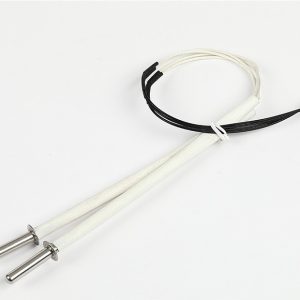
Home Appliance Temperature Sensors
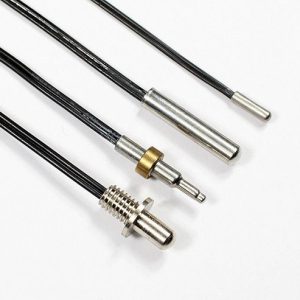
GRM-010 Oven Temperature Sensor

Kettle & Coffee Maker Temperature Sensors
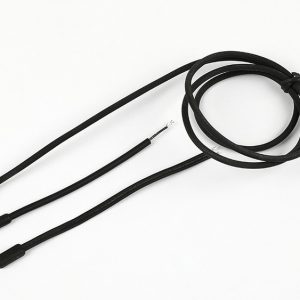
GRM-016 Kettle & Coffee Maker Temperature Sensor

Automotive & EV Temperature Sensors

GRM-040 EV Battery Temperature Sensor

Section

Helpful reading before you commit

These guides answer the specification, compatibility, or application questions that most often shape the final choice.

Guide
How Custom Temperature Sensors Are Designed for OEM Applications
A grounded overview of how custom sensor projects move from application data to samples, validation, and repeatable production.
Read more →
Guide
10K vs 50K vs 100K NTC Sensors: Which Resistance Value Fits Your Application?
Useful when you are narrowing the resistance value that best matches your control board, tolerance window, and sensing range.
Read more →
Guide
How to Choose a Temperature Sensor Manufacturer: OEM Supplier Checklist
A practical checklist for comparing engineering support, process control, communication, and long-term supply stability.
Read more →
Guide
How to Select Resistance, Beta Value, and Housing for NTC Sensors
Focuses on the specification details that most often decide fit, response, and long-term reliability.
Read more →
Section

Related routes worth opening alongside this one

Solution
Applications
Use end-use environment as the fastest way to narrow the right solution path.
Read more →
Solution
NTC Temperature Sensors
A broad commercial entry point for NTC sensor assemblies across appliance, refrigeration, beverage, and battery projects.
Read more →
Solution
Manufacturing Capabilities
Review the production-side context behind custom and repeat-order sensor assemblies.
Read more →
Solution
Quality Control & Testing
Read how consistency, fit, and performance checks support dependable supply decisions.
Read more →
Section

Frequently asked questions

What is the best starting point for a custom inquiry?
The strongest start is a short description of the application, the working temperature range, the physical space or mounting limits, and any cable or connector preferences that are already known.
Do I need a finished drawing before I start?
No. Many projects begin before the final drawing exists. A sample, a rough dimensional target, or photos of the installed space can still be enough to begin the conversation.
Can custom projects still draw from existing product families?
Yes. Sometimes the cleanest route is to start from an existing family on NTC Temperature Sensors and adapt the housing, cable, or terminal details to fit the new application.
What comes next after this overview?
This overview connects directly into Applications, the product hub, and the technical guides so you can support the inquiry with both commercial and technical context.
If the project still has open questions around fit, response, cable build, or connector choice, it is usually worth starting the custom conversation now rather than forcing a standard part into the wrong application.