Temperature Sensor Solutions

Temperature Sensors, Probe Systems, and Oven Accessories Built Around Real Applications

CHOGORI INDUSTECH LTD supports appliance, refrigeration, beverage, automotive, and replacement-part programs with OEM NTC sensor assemblies, cooking probes, and matching high-temperature accessories. From first comparison to final fit confirmation, the range is organized to keep selection clear, technical guidance practical, and RFQ steps straightforward.

OEM & ODM supportReplacement-ready probe systemsHigh-temperature accessory matchingApplication-led engineering

Some visitors arrive with a drawing and a target specification. Others have a failed part, a connector measurement, or a model reference in hand. This opening overview is designed to support both paths, whether you need a custom temperature sensor manufacturer, a proven NTC sensor family, or a fast match for a meat probe or receptacle socket.


Section

Choose the route that matches the job in front of you

Most buying journeys usually start from one of four entry points: sensor families, cooking probe systems, application environments, or technical guidance.

Products

Browse core product families

Start with the commercial families that anchor the catalog and move into the right product or supporting guide from there.

Applications

Navigate by application

If the end-use environment is already clear, the application overviews help narrow the right construction, cable, housing, and performance priorities faster.

Tech Info

Use the technical library

For visitors who are still comparing sensing methods, resistance values, connector sizes, materials, or failure patterns, the reading path is often the quickest way forward.


Section

Featured products buyers review first

These product details give the fastest picture of the range currently available across appliance sensors, refrigeration sensors, beverage sensors, EV sensors, probe systems, and oven accessories.
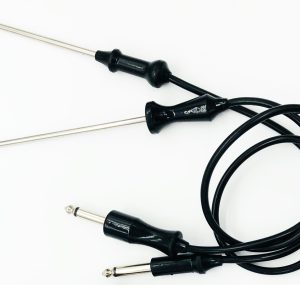
Oven Receptacle Sockets & Accessories
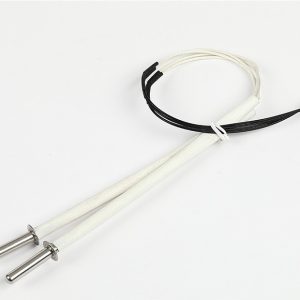
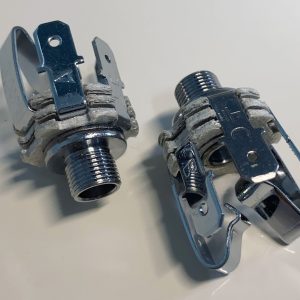
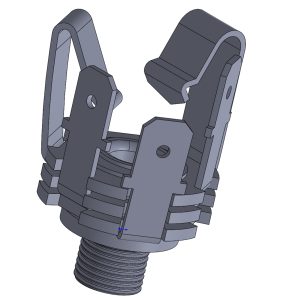
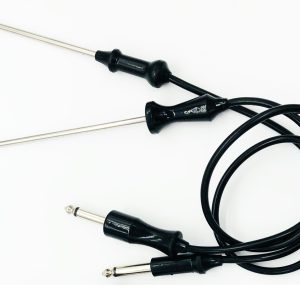
6.35mm Oven Receptacle Socket

Home Appliance Temperature Sensors

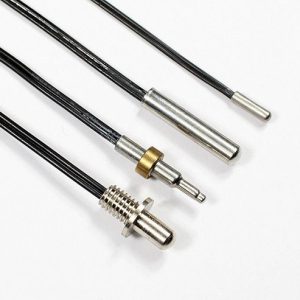
GRM-010 Oven Temperature Sensor

Kettle & Coffee Maker Temperature Sensors
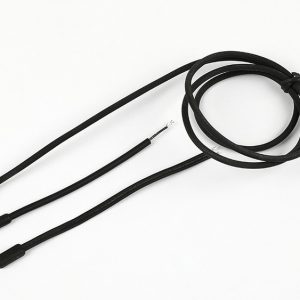
GRM-016 Kettle & Coffee Maker Temperature Sensor

Automotive & EV Temperature Sensors

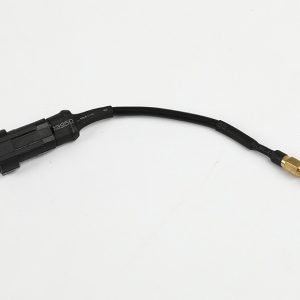
GRM-040 EV Battery Temperature Sensor

Oven Receptacle Sockets & Accessories
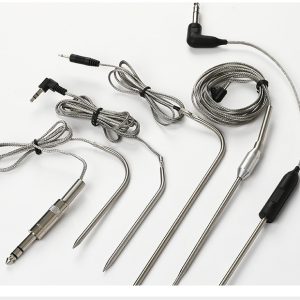
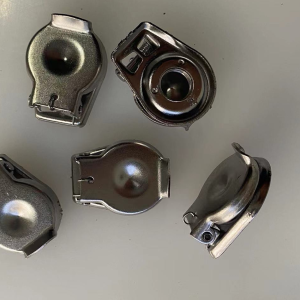
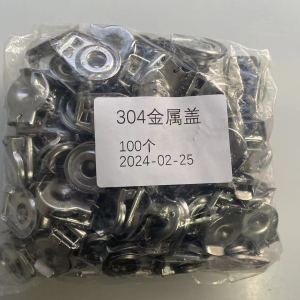
Oven Receptacle Cover Cap


Section

Why teams use this catalog as a working shortlist

The commercial overviews are connected to the practical guides that answer the questions buyers usually have before they are comfortable sending a quote request.

For OEM programs
Use Custom Temperature Sensor Manufacturer when the project still needs application review, configuration planning, or sample discussion.
For replacement demand
Use the product hub and the guide library when the starting point is a broken probe, a connector check, or a missing receptacle.
For process confidence
Review manufacturing capabilities and quality control & testing to understand how builds are verified.
For direct support
Move straight to Request a Quote or Contact when the specification is already close to final.

Section

Common questions before the first quote request

Can you support both custom projects and standard-product demand?
Yes. Some visitors use the site to review catalog products, while others start with custom design support for a new build. Both paths are supported clearly.
Where should I start if I only know the appliance or end-use environment?
Start with Applications. Those routes are built to narrow the right family by operating environment before you step into a specific product.
What if I need to replace a probe or accessory and do not know the original specification?
Start with the probe and accessory sections, then use the linked guides in Tech Info. Photos, connector dimensions, and appliance references often help narrow the correct match quickly.
How do I know whether to use a sensor family overview or a technical guide first?
If you are already close to purchase, start with the solution overview. If you are still comparing resistance values, housings, connector sizes, or failure causes, begin with the guide library and then move into the product family that fits best.
The cleanest next step is the one that matches your current certainty level: browse product families, open the technical guides, or send the project details and let the team help narrow the right route.
Engineering to production

Move from part brief to validated build with fewer handoffs

Some programs begin with a finished drawing. Others start with an appliance problem, a connector size, a replacement need, or a target operating range. The strongest shortlist appears when design context, production readiness, and verification details are considered together from the start.

That approach narrows the field faster, reduces back-and-forth, and makes the first technical reply more useful because the real environment, cable path, housing limits, and response target are already in view.

Where most projects go next
Custom sensor route
Custom temperature sensor manufacturer
Start with build direction, materials, connector fit, operating range, and target resistance profile.

View custom route

Production
Manufacturing capabilities
Review assembly readiness, lead construction, molding, cable handling, and OEM production support.

Explore production

Validation
Quality control and testing
See how consistency checks, verification, and shipment readiness support OEM and replacement demand.

See validation steps

Program fit

Choose by operating environment, replacement path, or control challenge

The same sensing principle can serve very different jobs depending on moisture exposure, cable routing, connector style, contact temperature, food-contact handling, cold-side cycling, or battery-pack packaging. These routes help narrow the shortlist faster.

Home appliances
Home appliance temperature sensors
For ovens, air fryers, microwave systems, and compact electric equipment where cable path, housing, and heat exposure must stay balanced.


Cold-side control
Refrigeration temperature sensors
Built around low-temperature stability, moisture handling, evaporator positioning, and repeated compressor cycling.


Beverage systems
Kettle and coffee maker temperature sensors
Useful when fast response, cap construction, wire routing, and cycling at high temperature all matter at once.


Automotive and EV
Automotive and EV temperature sensors
For battery monitoring and vehicle programs that need secure terminals, durable housings, and stable sensing under vibration and heat.


Cooking probes
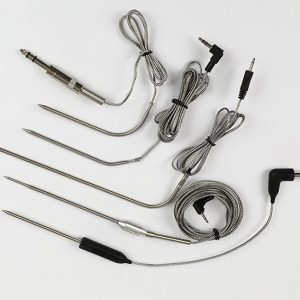
Oven meat probe thermometers
A strong route for cooking-temperature measurement, replacement-probe compatibility, and food-ready probe construction.


High-temperature accessories
Oven receptacle sockets and accessories
Useful when the target job includes socket compatibility, plug size, thread details, heat resistance, and replacement matching.

Technical reading

Open the guide that answers the next decision point

A stronger shortlist usually comes from one well-chosen article, not ten generic tabs. These reading paths help visitors compare sensor types, understand probe and connector fit, and narrow application choices before sending requirements.

Quote readiness

Send the details that help the first reply land closer to the real build

A faster first conversation usually starts with a few grounded details. Even when the drawing is incomplete, these signals help narrow materials, response targets, connector options, and replacement compatibility.

Helpful starting details
  • Target resistance or known thermistor value
  • Operating temperature range and response priority
  • Cable length, conductor preference, or insulation limits
  • Connector style, plug size, terminal, or socket fit
Useful context
  • Application environment and contact location
  • Thread, mounting, cap, or housing preference
  • Replacement reference, failed sample, or old part photo
  • Forecast volume, sampling need, and timing expectations

Next step
Turn the shortlist into a practical conversation
Use the quote route if the technical direction is already clear, or move into the contact path when a faster back-and-forth is the better start.

Request a Quote
Contact the Team
Browse Products

More questions visitors ask

A few practical questions before materials, quantities, and connector fit get finalized

Can the process start from a failed sample or a photo instead of a finished drawing?
Yes. A failed sample, an old part, a connector photo, or a known application environment can still be enough to begin narrowing compatible sensor or accessory routes before the exact build is finalized.
What matters most when matching a replacement probe or receptacle?
The strongest clues usually come from plug size, connector style, cable construction, temperature range, insertion dimensions, and the equipment family the part has to fit. Those details often matter more than a partial label on the old part.
How can an OEM team shorten the path from initial review to a usable quotation?
Share the target environment, resistance target if known, connector or terminal requirements, cable length, housing preference, and expected quantity range in the same message. That creates a much tighter first reply than sending only a broad product request.