Application Paths

Choose Solutions by Operating Environment, Not by Guesswork

When the end-use environment is already clear, the application route is often the fastest path through the available options. Instead of comparing every product family at once, you can begin with the working conditions that matter most: controlled heating, refrigeration, repeated boiling cycles, or battery thermal management.

Appliance controlCold-chain sensingBeverage heatingBattery monitoring

This overview helps teams move from application language into a practical shortlist. It connects the broader commercial overviews, the most relevant products, and the technical articles that answer the real questions behind fit, durability, response, and compatibility.

Section

Start with the environment where the sensor has to perform

Each of the application overviews below is written around the thermal, mechanical, and reliability concerns that usually decide the right construction.

Solution
Home Appliance Temperature Sensors
Sensor solutions for ovens, microwaves, air fryers, and other controlled-heating appliances.
Read more →
Solution
Refrigeration Temperature Sensors
Sensor assemblies for refrigerators, freezers, and cold-side control points.
Read more →
Solution
Kettle & Coffee Maker Temperature Sensors
Temperature sensing for beverage appliances with repeated heat cycles and shutoff logic.
Read more →
Solution
Automotive & EV Temperature Sensors
Monitoring solutions for battery packs and thermal-management systems.
Read more →
Section

How visitors usually use the application route

The application overviews are most helpful when you know where the part will run, but you still need help narrowing the right build.

For OEM sourcing
Begin with the operating environment, then move into custom development or the nearest sensor family depending on whether the build is standard or custom.
For replacement decisions
Use the environment overviews to confirm the likely sensor or probe family, then compare the matching products in Products.
For technical validation
Move from the application overview into the specific supporting articles in Tech Info when you need to compare materials, connectors, resistance values, or failure causes.
For quick RFQs
Once the environment and basic fit are clear, Request a Quote becomes the fastest way to move the project forward.
Section

Application-linked products worth reviewing first
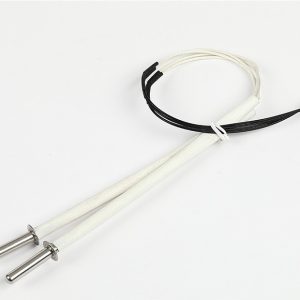
Home Appliance Temperature Sensors
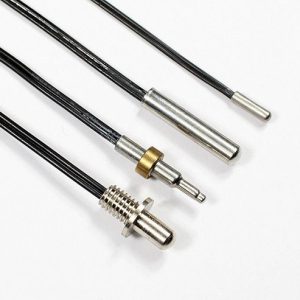
GRM-010 Oven Temperature Sensor

Kettle & Coffee Maker Temperature Sensors
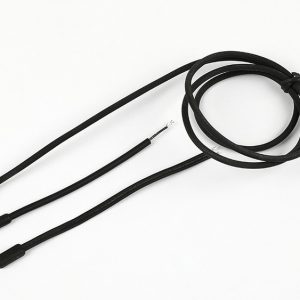
GRM-016 Kettle & Coffee Maker Temperature Sensor

Automotive & EV Temperature Sensors

GRM-040 EV Battery Temperature Sensor

Section

Guides that help when the application is clear but the build is not

These pieces help bridge the gap between a general environment and a detailed part specification.

Guide
How to Select Resistance, Beta Value, and Housing for NTC Sensors
Focuses on the specification details that most often decide fit, response, and long-term reliability.
Read more →
Guide
NTC vs Thermocouple for Ovens, Air Fryers, and Small Appliances
Compares common sensing approaches in controlled-heating appliances where stability and cost both matter.
Read more →
Guide
Choosing a Refrigeration Sensor by Resistance, Moisture Protection, and Response Time
Helps narrow refrigeration sensors by the factors that most often change real-world performance.
Read more →
Guide
Aluminum Cap vs Ceramic Cap Temperature Sensors for Beverage Appliances
A build-focused comparison for beverage appliances with different thermal and mechanical demands.
Read more →
Guide
Why EV Battery Packs Need Fast-Response Temperature Sensors
Shows why sensor speed and stable contact matter in battery packs and thermal management systems.
Read more →
Guide
How to Choose an Automotive Temperature Sensor for Battery Packs and Thermal Management
A practical buyer guide for selecting the right configuration for automotive and EV thermal monitoring.
Read more →
Section

Frequently asked questions

Why start with applications instead of product categories?
Because many buying decisions are shaped first by operating conditions such as heat exposure, moisture, mounting style, and cycling behavior. Beginning with the application often reduces time spent comparing products that were never a real fit.
Can one product family serve more than one application?
Yes. A sensor family can be adapted across several environments, but the housing, cable, sealing, connector, or mounting details often need to change with the use case.
What if my project crosses two application areas?
That happens often. Start with the environment that creates the stricter requirement, then use the linked products and guides to compare construction options that can satisfy both conditions.
Should I still use the application overview if I already have a part number?
If the part number is reliable, you can go straight to Products or Request a Quote. The application overviews are still useful when you want a broader technical check before committing.
When the environment is already known, the next step is to compare the right family and the right guide instead of every option at once.